Stand in front of any office-chair listing and you face the same fork: a cool, taut mesh back or a padded, contoured foam one. Neither is universally better; they suit different bodies, different rooms and different working days. We spent full eight-hour days in both types to work out which holds up better, and this comparison covers breathability, support, durability, comfort and price.
Mesh vs foam office chair: the short answer
If you run hot, sit in a warm room or want a light, breathable chair through a long day, mesh is usually better. If you want a softer, more cushioned sit, prefer warmth or lean back for long stretches, foam tends to win. Premium chairs increasingly blend the two, a mesh back for airflow with a foam seat for cushioning, which is often the best of both for marathon days.
What is a mesh office chair?
A mesh chair uses taut woven fabric across a frame instead of padding, so your weight is spread across the surface. The Herman Miller Aeron is the famous example, and mesh chairs now span every price point from about £150. A strong Amazon UK example is the SIHOO Doro C300, a breathable mesh chair with dynamic lumbar, at £279.96 (4.2 stars from 1,874 ratings).


Mesh: pros | Mesh: cons |
Excellent breathability, stays cool | Can feel firm, even hard, to some |
Distributes weight evenly | Cheap mesh can sag over time |
Light, airy, modern feel | Seat edge can dig in if poorly designed |
Great for warm rooms and hot sitters | Less plush for relaxed reclining |
What is a foam office chair?
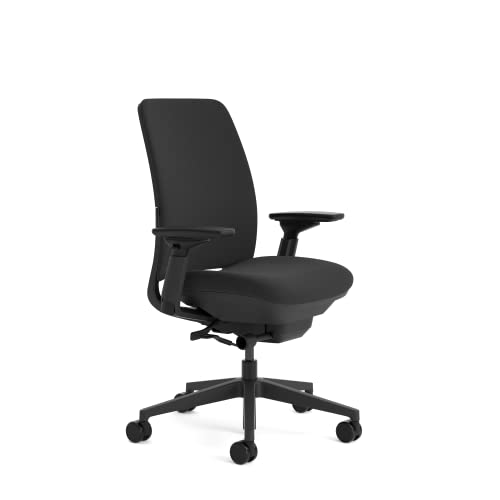
A foam chair uses moulded padding, usually high-density foam, over a solid back and seat in fabric or leather. The Steelcase Leap is a benchmark example, listed on Amazon UK at £1,239 (September 2026).
Foam: pros | Foam: cons |
Soft, cushioned, contouring comfort | Retains heat over hours |
Feels supportive and cosy | Quality foam adds cost and weight |
Great for relaxed reclining | Cheap foam compresses and flattens |
Warmer in cold rooms | Less airflow than mesh |
Mesh vs foam: head to head
Factor | Mesh | Foam |
Breathability | Excellent | Moderate to poor |
Cushioned comfort | Firmer | Softer, contouring |
Support over long days | Even, distributed | Contoured, can flatten if cheap |
Durability | Good (quality) / sags (cheap) | Good (quality) / compresses (cheap) |
Best room temperature | Warm rooms | Cool rooms |
Typical price spread | £150–£1,500 | £120–£1,300 |
Maintenance | Wipes clean easily | Fabric can mark, needs care |
Breathability
This is mesh’s biggest win: heat and moisture do not build up against your back. In a warm room, in summer, or if you simply run hot, mesh keeps you noticeably more comfortable at hour six. Foam traps warmth, pleasant in a cold home office in January and less so in July.
Support and pressure
Mesh spreads weight across a taut surface and avoids pressure points. Foam contours to you and can feel more immediately comfortable, especially under the thighs. For long days, quality is the deciding factor: good mesh stays supportive for years while cheap mesh sags into a hammock, and good foam holds its shape while cheap foam flattens within months.
Durability
Both last when you buy quality and wear out quickly when you do not. Durability tracks price and brand more than material.
Comfort over a full working day
If you stay fairly upright and active at the keyboard, mesh’s even support and cooling tend to win. If you lean back often and want a cosier feel during calls and reading, foam edges ahead. Many people find a hybrid ideal: a breathable mesh back with a cushioned foam seat.
Which is better for long days?
For most home workers putting in full eight-hour days, we lean towards mesh or a mesh-back hybrid, because heat build-up quietly erodes comfort over a long afternoon and mesh solves it. If your office is cold, you prefer a softer seat or you spend a lot of time reclined, a good foam chair serves you beautifully. The worst outcome is buying cheap in either material.
Price: does mesh or foam cost more?
Neither is inherently cheaper. At the budget end you can find capable mesh chairs from about £150 and decent foam chairs from about £120; at the premium end both the mesh Aeron and the foam Leap sit well above £900. You are really paying for frame quality, foam density or mesh tension, and adjustability. A £400 chair of either type will usually outlast and out-support a £120 one.
Cleaning and maintenance
Mesh is easier to keep clean: a damp cloth clears dust and the odd splash, and the open weave does not hold spills. Fabric foam collects crumbs and marks and needs prompt blotting, while faux-leather foam wipes clean but can crack over many years if the coating is cheap.
What about hybrid chairs?
A growing number of chairs pair a breathable mesh backrest with a padded foam seat, putting each material where it works best. Many of the best mid-range chairs we recommend, including several FlexiSpot and SIHOO models, use this layout. If you are torn, a hybrid is rarely the wrong answer.
Which should you buy?
Choose mesh if you run hot, work in a warm room, want a light modern feel and sit fairly upright and active. Choose foam if you prefer a cushioned, contouring sit, work in a cooler room and like to recline. If you cannot decide, a mesh-back, foam-seat hybrid gives airflow where you need it and cushioning where you sit. Whichever you choose, prioritise build quality and proper adjustment over the material badge.
Related reading
- Herman Miller Aeron vs Steelcase Leap The Ultimate Showdown
- SIHOO Doro C300 Review Best Mid-Range Ergonomic Chair
- FlexiSpot BS8 Pro Review: The UK’s New Ergonomic Favourite?
- Best Office Chairs in 2026: Our Top 10 Tested Picks (UK)
- Best Budget Office Chairs Under 200 UK
- How to Choose an Ergonomic Office Chair The Definitive UK Guide