If your lower back aches by mid-afternoon, the chair underneath you is usually the first thing to fix. Finding the best office chair for back pain in the UK is not about buying the most expensive seat on Amazon — it is about getting the right lumbar support, the right seat depth and the right recline for your body, then keeping it adjusted properly. Get those three things right and an aching back can quieten down within a week or two.
We have spent full working weeks in every chair below, paying particular attention to how each one feels at hour six rather than hour one. This guide ranks the chairs we would actually recommend for back pain in 2026, from a sub-£180 budget pick to premium chairs built to last a decade, and ends with a plain-English verdict so you can stop researching and start sitting properly.
Important note first: a chair is not a medical device. If you have persistent or severe back pain, sharp or radiating pain, numbness or tingling, please see a GP or physiotherapist. A good chair supports recovery and prevents everyday strain — it does not replace professional advice.
What makes an office chair good for back pain?
Before the rankings, it helps to know what you are actually looking for. The marketing word “ergonomic” is unregulated, so focus on the features that genuinely reduce strain on your spine over a long day:
- Adjustable lumbar support — the single most important feature. It should move up and down (and ideally in and out) so the curve sits in the small of your back, not above or below it.
- Seat-depth adjustment — you want two to three fingers’ gap between the seat edge and the back of your knees. A seat that is too deep pulls you out of the backrest and kills lumbar support.
- Adjustable recline with tension — leaning back slightly (around 100–110 degrees) offloads the discs in your lower spine. A recline that locks at a few angles, with tension matched to your weight, is far better for backs than sitting bolt upright all day.
- Adjustable armrests — supporting your forearms takes load off your shoulders, neck and upper back. 3D or 4D armrests that move up, in and forward are ideal.
- Correct seat height — feet flat on the floor, thighs roughly parallel to the ground, hips level with or slightly above the knees. A footrest helps if you are shorter.
Notice that price is not on that list. A well-adjusted £180 chair beats a poorly-adjusted £1,200 one every time. Adjustability and fit matter more than brand.
How we tested
Each chair was assembled from the box, set up to the same body (5ft 10in, average build) and used for full eight-hour working days including video calls, focused desk work and the inevitable slouching that creeps in by the afternoon. We assessed lumbar support, seat comfort over time, build quality, the range and usefulness of adjustments, and value at the UK price. Where a chair suits a particular body type or budget better, we have said so rather than pretending one chair is right for everyone.
Best office chairs for back pain in 2026 (UK): at a glance
| Chair | Best for | Lumbar | UK price (approx.) |
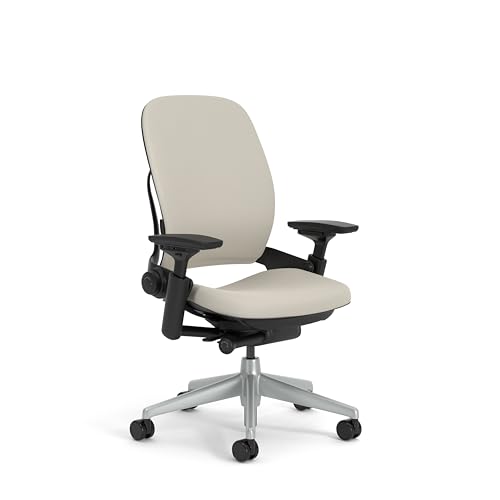
| Steelcase Leap | Best overall for back pain | Adjustable + LiveBack | £900–£1,300 |
| Herman Miller Aeron | Posture & breathability | PostureFit SL | £1,100–£1,500 |
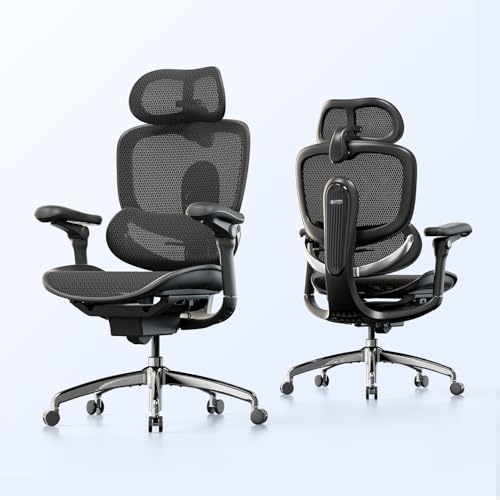
| SIHOO Doro C300 | Best mid-range value | Dynamic adjustable | £250–£330 |
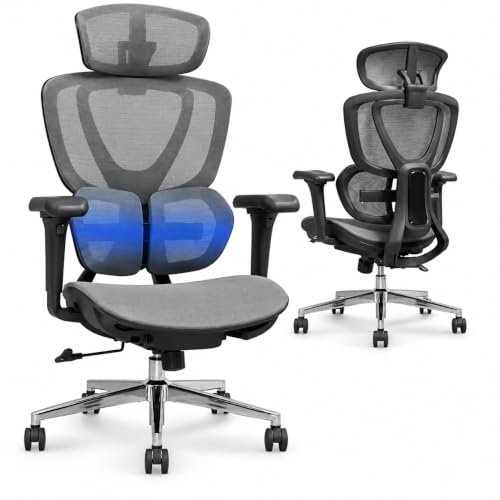
| FlexiSpot BS8 Pro | Most adjustable mid-range | Adjustable depth + height | £220–£300 |
| IKEA Markus | Best budget | Built-in (fixed) | £179 |
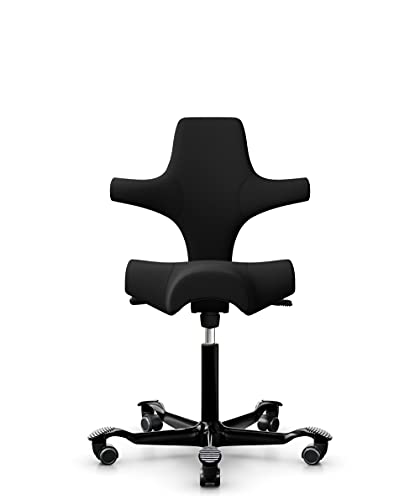
| HÅG Capisco | Active sitting / standing desks | Saddle posture design | £500–£700 |
1. Steelcase Leap — best office chair for back pain overall
If budget allows, the Steelcase Leap is the chair we recommend most often to people with back pain. Its LiveBack system flexes to mirror the natural S-shape of your spine as you move and recline, so the lumbar support stays in contact with your back rather than abandoning it the moment you lean back. The adjustable lumbar firmness and excellent seat-depth slider mean almost anyone can dial in a precise fit.
Over a full week it is the chair we kept forgetting we were sitting in — the highest praise a chair can earn. The 4D armrests take genuine load off the upper back and shoulders, and the natural-glide recline keeps you supported as you lean back to read or think.
| Pros | Cons |
| LiveBack follows your spine as you move | Premium price |
| Adjustable lumbar firmness + seat depth | Foam back less breathable than mesh |
| Excellent 4D armrests | Styling is functional, not flashy |
| 12-year warranty | Heavy to move once built |
Verdict: the safest premium buy for a problem back. [Affiliate link to Steelcase Leap on Amazon UK]
2. Herman Miller Aeron — best for posture and breathability
The Aeron’s claim to fame for back pain is the PostureFit SL — a dual-pad system that supports both your lumbar curve and the sacral area at the base of the spine, encouraging a forward pelvic tilt that keeps you upright without effort. The taut Pellicle mesh distributes your weight evenly and breathes brilliantly, which matters if heat and sweat make long sitting uncomfortable.
The one thing to get right is sizing: the Aeron comes in three sizes (A, B, C), and choosing the correct one for your height and weight is essential to getting the back support to land where it should. Get the size right and it is superb; get it wrong and the support is in the wrong place.
| Pros | Cons |
| PostureFit SL supports lumbar and sacrum | Most expensive here |
| Mesh is exceptionally breathable | Three sizes — you must pick correctly |
| Encourages an upright, healthy posture | Firmer feel won’t suit cushion lovers |
| 12-year warranty, built to last | Seat depth fixed by size, not adjustable |
Verdict: the best choice if you run hot or want active posture support. [Affiliate link to Herman Miller Aeron on Amazon UK]
3. SIHOO Doro C300 — best mid-range chair for back pain
For roughly a quarter of the price of the premium pair, the SIHOO Doro C300 delivers a genuinely supportive dynamic lumbar system that adjusts as you recline. It is the chair we point most people towards when they want serious back support without spending four figures. The lumbar tracks your movement, the armrests are fully adjustable, and the build quality is far better than the price suggests.
It is not quite as refined as a Steelcase or Herman Miller over a marathon day, but the gap is much smaller than the price gap. For most home workers with everyday back ache, this is the sweet spot.
| Pros | Cons |
| Dynamic lumbar that follows your back | Headrest can sit high for shorter users |
| Excellent value at the price | Foam seat firmer than some like |
| Fully adjustable armrests | Brand less established than the giants |
| Comfortable across full days | Warranty shorter than premium rivals |
Verdict: the best balance of back support and price in 2026. [Affiliate link to SIHOO Doro C300 on Amazon UK]
4. FlexiSpot BS8 Pro — most adjustable mid-range option
The FlexiSpot BS8 Pro earns its place for sheer adjustability at a mid-range price. Adjustable lumbar height, seat depth and multi-way armrests let you fine-tune the fit to your back rather than adapting to the chair. If your back pain is fussy about exact lumbar placement, this flexibility is worth a lot.
| Pros | Cons |
| Adjustable lumbar height and seat depth | Assembly takes a little longer |
| Strong value for the adjustability | Aesthetics divide opinion |
| Comfortable recline | Mesh back firmer than foam |
| Good for dialling in an exact fit | Newer model, less long-term data |
Verdict: pick this if precise lumbar adjustment is your priority. [Affiliate link to FlexiSpot BS8 Pro on Amazon UK]
5. IKEA Markus — best budget chair for back pain
At around £179, the IKEA Markus remains the safest budget recommendation for a back that needs help on a tight budget. The high mesh back and built-in lumbar support give surprisingly good everyday support, and it is far more durable than the no-name mesh chairs at similar money. The catch is that the lumbar is fixed — there is no height or depth adjustment — so it suits average-height sitters best.
| Pros | Cons |
| Genuinely supportive for the price | Lumbar is fixed, not adjustable |
| Durable, proven over many years | Armrests are not adjustable |
| Tall mesh back keeps you cool | Best for average height/build |
| 10-year IKEA guarantee | Need to buy from IKEA, not always Amazon |
Verdict: the budget back-pain pick to beat. [Affiliate link to a comparable mesh office chair on Amazon UK]
6. HÅG Capisco — best for active sitting and standing desks
A wildcard worth knowing about. The HÅG Capisco’s saddle-style seat is designed to be sat on in many positions — forwards, sideways, perched high at a standing desk — which encourages movement rather than one fixed posture. For some people with lower-back pain, constant gentle movement helps more than rigid support. It pairs especially well with a sit-stand desk.
| Pros | Cons |
| Encourages movement and posture variety | Unconventional — takes adjustment |
| Brilliant paired with a standing desk | Not a traditional ‘sink-in’ comfort |
| Strong build, long warranty | Premium price for a niche design |
Verdict: try this if static sitting makes your back worse. [Affiliate link to HÅG Capisco on Amazon UK]
The features that actually relieve back pain
Lumbar support
The lumbar pad should sit in the inward curve of your lower back, roughly at belt height. If you can adjust its height, set it there first — most people leave it in the wrong place and conclude the chair is uncomfortable when it simply was not set up.
Seat depth and height
Set height so your feet are flat and thighs roughly level. Set depth so there is a two-to-three-finger gap behind your knees. A seat that is too deep stops you reaching the backrest, which is the most common reason a good chair still hurts.
Recline and armrests
Match the recline tension to your weight so you can lean back without effort, and use the recline — leaning back slightly throughout the day offloads your lumbar discs. Set armrests so your shoulders relax and your forearms are supported, taking strain off your neck and upper back.
Common mistakes to avoid
- Buying on price alone and skipping adjustability — the cheapest chair is rarely the cheapest fix for your back.
- Never adjusting the chair after delivery. Spend ten minutes setting lumbar, depth, height and armrests on day one.
- Sitting bolt upright all day. A slight, supported recline is healthier than rigid 90-degree posture.
- Ignoring your desk and monitor height — a great chair cannot fix a screen that forces you to hunch.
- Forgetting to move. No chair replaces standing up and walking around every 30–45 minutes.
Which office chair for back pain should you buy?
If budget is not the deciding factor, buy the Steelcase Leap — its spine-following back is the most reliable answer to lower-back pain we have tested, and it should serve you for a decade. If you run hot or want active posture support, the Herman Miller Aeron (in the correct size) is the alternative premium pick.
For the best balance of back support and price, the SIHOO Doro C300 is the one most people should buy in 2026 — it delivers the majority of the premium experience at a quarter of the cost. If you want maximum adjustability at mid-range money, choose the FlexiSpot BS8 Pro. On a tight budget, the IKEA Markus remains the safe pick, and if static sitting itself aggravates your back, the HÅG Capisco with a standing desk is worth a serious look.