The best microphone for Zoom calls in 2026 is not the one with the biggest spec sheet: it is the one that makes you sound clear, natural and free of room echo on a Tuesday-morning Teams call without you having to think about it. We tested popular USB and wireless microphones across a mix of home offices and ranked the seven we would actually recommend, using Amazon UK prices checked in September 2026.
Quick picks
Need | Microphone | Amazon UK price (Sept 2026) |
Best overall for video calls | Shure MV7+ | £255 |
Best under £100 | MAONO dynamic USB/XLR mic with boom arm | £58.99 |
Best USB condenser for podcasting and calls | Rode NT-USB+ | £134.90 |
Best wireless lavalier for hybrid working | Rode Wireless GO II | £191.41 |
Best premium broadcast quality | Shure SM7B (needs an interface) | £344 |
Best for tight desks and small rooms | Audio-Technica AT2020USB-X | £114 |
Best budget for occasional calls | FIFINE A8 USB microphone | £45.99 |
How we tested
Each microphone sat at a typical home-office distance of 15–25cm on a desk arm or stand, in rooms with normal furnishings. We measured voice clarity at the far end, background rejection (keyboard, fan, traffic) and set-and-forget reliability with Teams, Zoom and Meet. We also considered build quality, mount flexibility and whether there is a hardware mute button.
1. Shure MV7+: best overall for video calls
£255, rated 4.7 stars from 1,440 ratings. A dynamic broadcast-style microphone with USB-C and XLR outputs, a headphone jack for zero-latency monitoring and an auto-level mode so you can lean back or turn your head without the call going quiet. Because it is dynamic, it only picks up sound close to the capsule, so keyboard clatter and household noise all but disappear. It needs a boom arm or stand (£35–£70). There is also a bundle with a stand for £288.


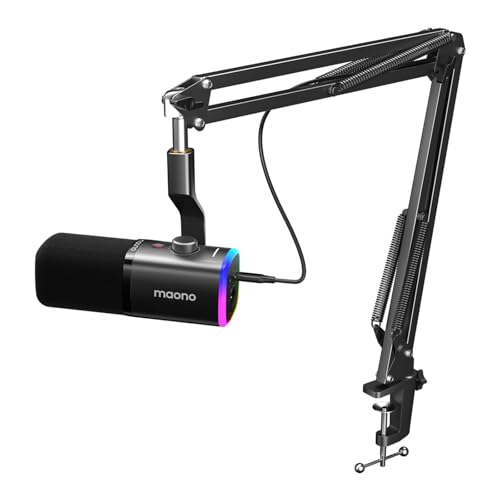
2. MAONO dynamic USB/XLR microphone with boom arm: best under £100
£58.99, rated 4.5 stars from more than 1,300 ratings. A dynamic USB and XLR microphone that includes a boom arm, giving you the noise-rejection benefit of a dynamic capsule for a fraction of the Shure’s price. It has less software polish and no automatic gain, so set the level once and leave it. It stands in for the FIFINE AmpliGame AM8 we used to recommend, which is no longer listed on Amazon UK.
3. Rode NT-USB+: best USB condenser for podcasting and calls
£134.90, rated 4.3 stars from nearly 1,400 ratings. A USB condenser that captures more detail and more of the room than a dynamic, so voices sound airy and present. It has USB-C, a headphone jack and onboard DSP with a high-pass filter and compressor. It will pick up your keyboard and radiator, so it is best in a quiet study.

4. Rode Wireless GO II: best wireless lavalier for hybrid working
£191.41, rated 4.3 stars from more than 5,500 ratings (limited stock at time of checking). Two clip-on transmitters and a receiver that works with Teams, Zoom and Meet. Voice volume stays the same whether you sit, stand or walk. You must remember to charge it, and the clip can be visible on shirts.

5. Shure SM7B: best premium broadcast quality
£344, rated 4.8 stars from nearly 12,000 ratings. An XLR-only broadcast dynamic microphone, so you need an audio interface and a sturdy boom arm. The SM7dB (with built-in preamp) that we used to recommend is not currently listed on Amazon UK, so the SM7B is the closest. For pure call work it is overkill, but for people whose job is their voice it is the equivalent of upgrading from a webcam to a real camera.

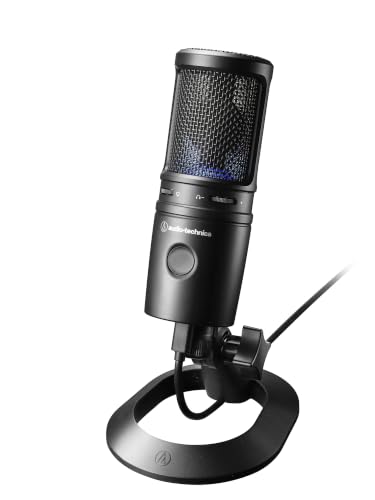
6. Audio-Technica AT2020USB-X: best for tight desks and small rooms
£114, rated 4.5 stars from 810 ratings (limited stock at time of checking). A slim side-address USB condenser that sits comfortably on a small desk, with a headphone jack and mix dial. Like other condensers it hears your room, so it is best in a quiet space.
7. FIFINE A8 USB microphone: best budget for occasional calls
£45.99, rated 4.6 stars from more than 2,500 ratings. Not everyone needs to sound like a podcaster. If you take two or three calls a week and want to stop sounding tinny, this is a cheap, well-reviewed step up from a laptop microphone, though voice quality is behind the others here.

How to choose
Dynamic vs condenser: the biggest decision
Dynamic microphones (Shure MV7+, MAONO, SM7B) only pick up sound from a small zone in front of the capsule, which makes them excellent for noisy rooms and mechanical keyboards. Condensers (Rode NT-USB+, AT2020USB-X, FIFINE A8) capture more detail but also more of the room, so they suit treated or quiet spaces and recordings. Most home-office buyers should default to a dynamic.
USB or XLR?
USB is simpler: plug in and you are done. XLR needs an audio interface (typically £100–£150) but offers more flexibility. The MV7+ and the MAONO offer both.
Do you need a boom arm?
A boom arm helps when you want the microphone closer to your face without cluttering the camera shot. Budget around £20–£35 for a workable arm and £70 or more for a quieter, smoother one.
What about gaming headsets and earbuds?
A good gaming-headset mic beats a laptop microphone, but once you have heard yourself on any microphone above, you will not go back for any call that matters.
Which microphone should you actually buy?
If you take more than two calls a week and want a single answer, buy the Shure MV7+. If your budget is firm at under £100, buy the MAONO. If you also record podcasts and your room is quiet, the Rode NT-USB+ is a better all-rounder. If you move around, buy the Rode Wireless GO II. And if you take fewer than five calls a month, the FIFINE A8 is honest, cheap and works.
Related reading
- Rode NT-USB Mini Review: Best Compact Mic for Calls
- Jabra Speak2 55 Review: Best Speakerphone for Group Calls
- Best Headsets for Video Calls Working From Home 2026 UK
- Best Webcams for Working From Home in 2026 UK
- Best USB Speakerphones for Home Office Conference Calls UK
- Jabra Evolve2 65 Review: The Work-From-Home Headset Benchmark